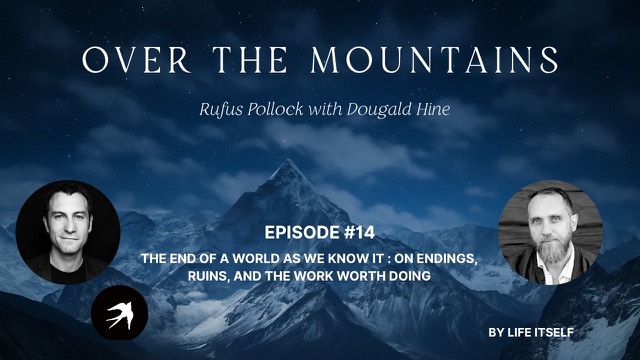
PodcastEpisode 14
The End of a World as We Know It: On Endings, Ruins and the Work Worth Doing
What it means to live at the end of a world: not the end of the world, but the end of the one we built around us.
What does it mean to live at the end of a world — not the end of the world, but the end of a world, the one we built around us? In this rich, wide-ranging conversation, Rufus sits down with Dougald Hine — writer, social thinker, and co-founder of the Dark Mountain Project — to trace a life spent following what he calls, in deeply unfashionable language, a calling. From turning down a BBC staff job at 25 to co-writing a manifesto that split the environmental movement down the middle, Dougald’s story is about what happens when you trust your gut before you can explain it to your head.
I think there was also always a sense of a gap between how things are and how they’re meant to be. ⁓ A sense that there’s something kind of deeply astray in the ways of living that we’ve taken for granted around here lately.
The conversation goes deep into the ideas behind his book At Work in the Ruins — including why he found himself, mid-pandemic, with nothing left to say about climate change, and what that silence revealed. He argues we have been asking too much of science: outsourcing judgment, values, and politics to something never designed to carry that weight. What COVID exposed, he suggests, is not just a virus but the structural brittleness of modern societies that have quietly lost the distributed capacity — in families, communities, culture — to look after themselves.
But this is not a conversation that ends in despair. Dougald offers a quietly radical map for what he calls “the four tasks for an age of endings” — saving, grieving, leaving, and weaving — and closes with Hannah Arendt’s idea of natality: the newborn’s first cry as the source of all genuine political possibility. The thing no algorithm can produce is the thing that has never been said before. If you’ve ever sensed that the story we’ve been living inside has run out, this episode will feel like finding people who noticed the same thing — and kept walking anyway.
If you want to go further with Dougald he is running a five week online series, Regrowing a Living Culture - a bit more practice, with his partner, Anna Björkman, starting on the 21st & 22nd of May.
Chapters
- 00:00The Journey Begins: Dougald Hine’s Early Life
- 09:05Finding a Path: The Influence of Faith and Intuition
- 20:41Awakening to Environmental Crisis: The BBC Experience
- 31:57The Dark Mountain Manifesto: A Reaction to Environmentalism
- 35:41Navigating Between Cynicism and Hope
- 38:16Creating Spaces for Mourning and Transformation
- 39:45Lessons from Dark Mountain: Community and Reflection
- 43:44The Role of Gathering: Spaces of Being vs. Doing
- 54:15Endings and New Beginnings: The Future Worth Working For
- 1:00:44The Dangers of Scientism and Cultural Malnutrition
- 1:05:50The Fragility of Modern Science and Belief
- 1:16:35COVID-19: A Catalyst for Reflection
- 1:17:10Navigating the Post-Pandemic Landscape
- 1:30:42Regrowing a Living Culture
Speakers
Dougald Hine is the author of At Work in the Ruins, co-founder of a school called HOME and a project called Dark Mountain. He hosts a couple of podcasts and publishes new writing regularly on Substack.
Rufus Pollock is a co-founder of Life Itself, an entrepreneur, activist, an author, as well as a long-term zen practitioner.
New here? Start with the three episodes we would begin with. New episodes come in our monthly email.