Jim Rutt and Rufus Pollock open with that question and follow it wherever it leads.
In late March, Jim Rutt and Rufus Pollock sat down to talk through three subjects Jim had been circling for months: the Fermi paradox, existential risk, and how worldviews change. Jim passed away in May, and we’re glad to share the conversation now. Here’s a recap of where it went.
If we’re alone, the stakes change
Jim starts with the Fermi paradox: with all those stars and planets, why do we see no sign of anyone else? He has come to think we may be unique as a general intelligence. If so, we might be the universe’s only chance to wake up, and losing that chance would be, in his words, “a literally cosmic level error.” Until we know the answer, he argues, we should apply the precautionary principle to the risks we keep piling up: nuclear weapons, bioengineering, and AI.
Why we keep racing ahead
Jim describes three nested “multipolar traps” around AI: companies competing with each other, investors pushing them to maximize returns, and nations that won’t slow down if their rivals don’t. From a cosmic view, he says, it doesn’t matter whether we reach artificial superintelligence now or in a thousand years. What matters is the risk of rushing before we understand it, the wisdom gap between our power and our wisdom.
Rufus adds that collective action is only half the problem. The other half is worldview. Drawing on the paper In Tech We Trust, he argues that technology has become the modern god, and that deep faith in individualism and “more tech is better” makes it hard to change course.
What changes a worldview?
Rufus tells the story of the Ilahita of Papua New Guinea, a community that grew far larger than its neighbors by building new rituals that bound its clans together. He asks whether we need something similar now, and whether AI could play the role of a common enemy that pulls us together, an idea Jim likens to the aliens arriving in science fiction.
They also look at how ideas spread, from outcasts to elites to everyone else. Rufus distinguishes change within an existing paradigm, such as women’s suffrage and gay rights, from a full paradigm shift, such as the rise of Christianity as Rome decayed.
What might come next
On the question of what could be our next ultimate value, Jim offers bringing the universe to life on a risk-adjusted basis while keeping humanity’s options open. Rufus points to harmony with nature, or to inner and cultural evolution.
They don’t agree on everything. Jim admits a blind spot for religion and ritual, and finds the idea of a meditation-centered future pretty dull. Rufus answers with Christopher Alexander’s argument that value is real, not merely subjective. The conversation ends where their ideas meet: Jim’s “fittedness in context,” drawn from Pirsig, and Rufus’s image of a mountaintop shrouded in fog, where no one reaches the summit but we can still tell which way is up.
About Jim Rutt
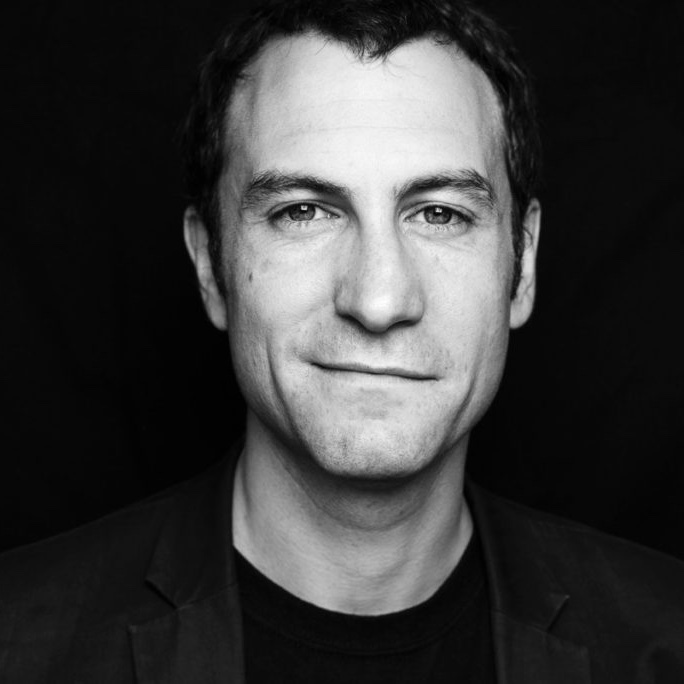
Jim Rutt (1953–2026) was an entrepreneur, complexity scientist, writer and podcaster. He led Network Solutions through its acquisition by VeriSign, served as Chairman of the Santa Fe Institute, and from 2018 hosted The Jim Rutt Show. He was a founding thinker in the Game B movement and kept recording, writing and exploring right to the end.
Links
- The Jim Rutt Show and Substack
- The Silent Sky and the Test Ahead, Jim’s essay on the Fermi paradox
- Jevons’ Paradox and the Fate of Software Developers in the Age of AI Coding, Jim’s essay on AI and software
- In Tech We Trust and Wisdom and Wanting What’s Good, Seeds of Renaissance papers
- Game B film