- Running now
- 22 Sep – 1 Dec 2026
- Format
- Short videos at your own pace, plus a live session with Valérie every two weeks
- Price
- €250
- Language
- English (also in French)
Rooted in an ancestral way of life and anchored in Zen tradition, this course invites you to design your own praxis ecology: a living structure for how you build, sustain and belong to community.
Most intentional communities collapse after a couple of years; most religious communities last for centuries. Could we keep what works in religious communities while keeping agency over our own lives? Could we have the deep listening of contemplation while staying connected to the world? Praxis Ecology explores that middle way, inspired by both Zen monasticism and lay spiritual communities.
- Led by
- Valérie Duvauchelle
- All videos and live sessions stay available once you register.
- Your own working design, adapted to your real context: a retreat, a co-living experiment, or an ongoing community.
- A real ecology of practice: food, body, structure, daily life and relationship, woven together rather than kept as separate modules.
- Grounded in real experience: built from what Life Itself has learned running residencies, not from theory.
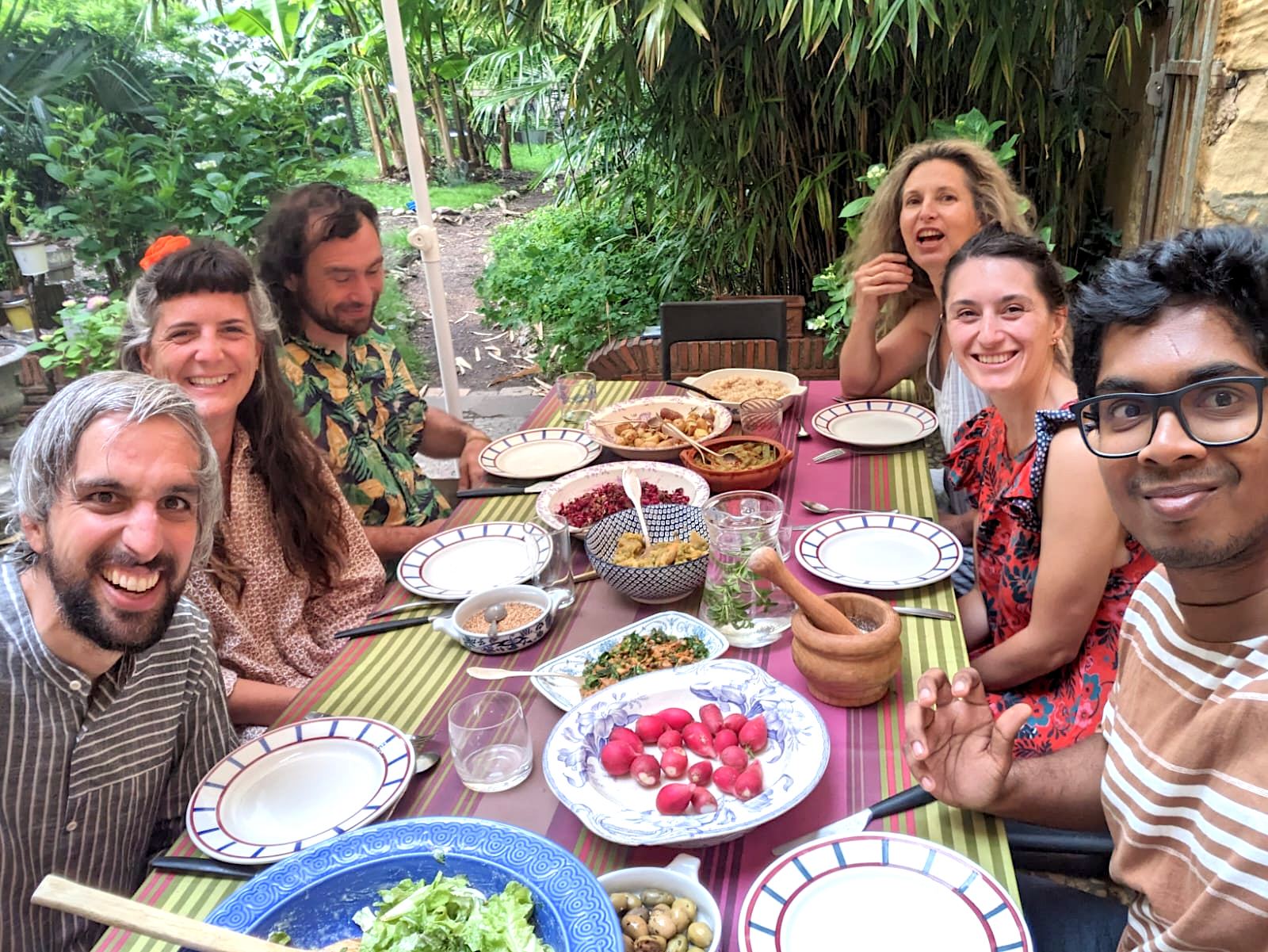
The course runs over six sessions in ten weeks. Each session takes two weeks: three to five short videos (about 15 minutes each), questionnaires and one design task (with a buddy if you like), then a live session with Valérie where everyone shares.
At the core are five Minimum Viable Practices, which together form a framework for designing your own secular monastery:
- Interbeing care. Embracing paradoxes; bearing witness as the ground for responding.
- Activating the body. Practices to reconnect body and mind, and to move from self-awareness towards a collective one.
- Moving together. Shared rhythms, roles and coordination that motivate and inspire us every day.
- A conscious food system. Food as a daily collective practice that anchors shared life.
- Connecting together. Relational practices that support belonging, trust and changes of perspective.
After each session you design your own practice; in the sixth session everyone presents their Praxis Ecology to the group. The course can be applied to a one-week retreat, a three-day gathering, a three-month co-living or an ongoing collective life.
- 22 Sep · Module 1, Interbeing care
- 29 Sep · Live session 1
- 6 Oct · Module 2, Activating the body
- 13 Oct · Live session 2
- 20 Oct · Module 3, Moving together
- 27 Oct · Live session 3
- 3 Nov · Module 4, A conscious food system
- 10 Nov · Live session 4
- 17 Nov · Module 5, Connecting together
- 24 Nov · Live session 5
- 1 Dec · Live session 6, presentations
We are shaped by the old world and carry its individualist habits, not only in thought but in action and feeling. So we cannot simply think our way into a new way of living. We have to design containers that produce new ways of being.
Praxis Ecology starts from reality rather than ideals: shared constraints, human patterns and conditioning, the need for food, coordination and rhythm, and the friction of living together. Attempts at collective living often struggle with a lack of structure, unrealistic expectations, exhaustion and fragmented daily coordination. Through simple, repeated forms (shared rhythms, roles and daily practices) a group begins to move together, and in that movement something changes.
It is not a method to apply step by step, nor a course on dialogue, healing trauma, governance or economics. It is a living structure, a resilient container for collective life amid uncertainty, that each group adapts to its own culture.
For two kinds of people arriving at the same door:
- The inner work already matters to you (meditation, presence, showing up for your own transformation) and you’re looking for a community structure that lets it hold in daily life.
- Community is already your project (a retreat, a co-living experiment, a life together) and what’s missing isn’t motivation but structure: a real recipe for food, space, rhythm and the daily friction of living with others.
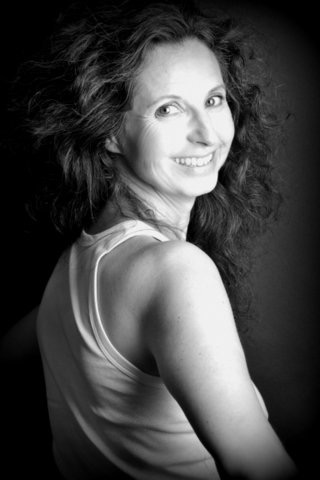
Valérie Duvauchelle is a contemplative activist and secular Zen nun in the Sōtō tradition. For fifteen years she has carried the spirit of the tenzo, the Zen role of the one who “activates” food, into conscious communities around the world. At the Riverside Life Itself hub in Bergerac, France, she has spent years developing a praxis ecology for community life. She is the author of two books in French, Le goût du silence (Actes Sud) and Shōjin, la cuisine zen des temples (Hachette). More about her journey.
Questions? Write to Valérie at [email protected].
22 Sep – 1 Dec 2026
6 sessions over 10 weeks · €250 · All videos and live sessions stay available once you register.
Register interest