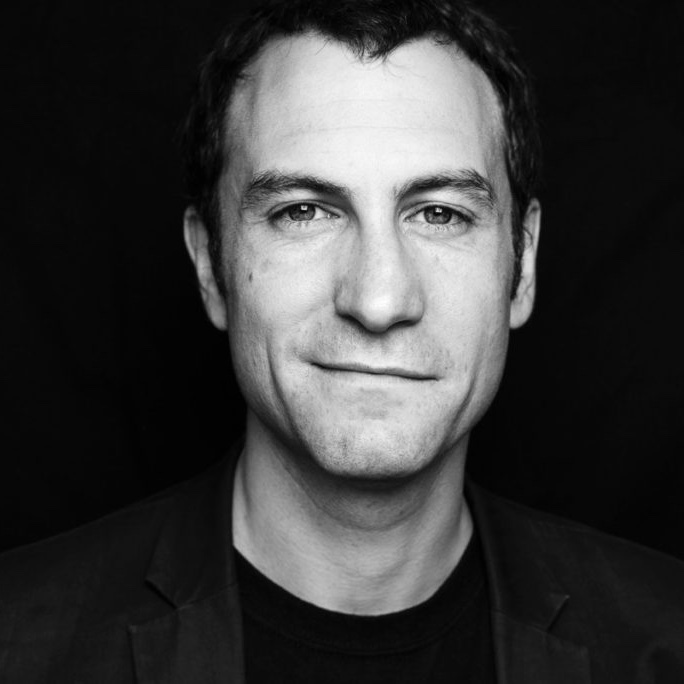
Rufus Pollock and Valerie Duvauchelle recorded this conversation on October 23, 2026, as an informal dialogue about what is coming up for them personally and in society.
Valerie says autumn, her favorite season, shifts her priorities toward contemplation. She usually meditates for an hour each morning and has recently felt a stronger urge to sit. She isn’t sure whether that’s the season or the state of the world, and she says other people feel it too. She describes her approach as listening deeply to what life wants, and says her guidance always comes through the body rather than the mind.
Rufus says AI gives him both excitement and unease. He can now research and build much more, but he notices that the more he can do, the more he wants to do. He compares the pace of change to a merry-go-round spinning faster and faster, and worries about where it ends. He mentions reading about a finance professional who said he now mostly hits “tab complete” and feels obsolete. Rufus is wary of how intoxicating the speed feels to him. He gives an example of putting his young daughter to bed and feeling pulled to go and note down an idea.
Valerie says this isn’t a personal flaw, since everyone is shaped by a culture that is accelerating. Her view is to enjoy the ride and observe it, not to hold back, even if it ends in a crash. Rufus prefers the word “discernment” to judgment, and distinguishes between enjoying something and being taken over by it.
Valerie says she senses that the world as we know it is ending, whether through food scarcity, financial problems or other crises, and that this view has gone from niche to mainstream in the last decade. She says it makes her want to contemplate beauty, and describes watching birds on her daily river walks. She says we all die, that culture hides this, and that realizing it early can make people more alive. Rufus agrees it’s better to face one’s own death now than only at the end. Valerie also says she believes the system may need to crash, and Rufus adds that deep change, for individuals and societies, usually comes through confrontation rather than when things go well.
Rufus then raises the recent protests in Paris and the riots that followed, caused by a small violent group, and says he was sad that it discredited the underlying movement. He asks Valerie whether her view implies we should want the breakdown to speed up. She says she wasn’t sad in that way: she has felt something was wrong since childhood, especially about how animals are treated, and sees this as the end of a long cycle. She says contemplative activism means holding all sides of the chaos, because each has its own logic.
Rufus says the events fit a larger picture of the end of modernity, a roughly thousand-year paradigm that also led to industrial animal slaughter. He argues for compassion toward people on all sides without giving up ethical judgment, and says “I’m right, you’re wrong” feeds the cycle. He wants spaces for dialogue that go beyond neutrality or tolerance and try to build a deeper shared understanding. He also quotes the joke that most activists are really “reactivists.”
Here they disagree. Valerie says trying to understand the other side is already a misstep and can be arrogant. She says change happens through the heart, and points to the early Gilets Jaunes, where people with different politics bonded at roundabouts over barbecues and beer. But she doesn’t believe such bonds last once normal life resumes, and she doesn’t believe people can fully understand each other given how much trauma they carry.
Valerie explains contemplative activism through Bernie Glassman and the Zen Peacemakers. The three tenets are not-knowing (approaching a situation without prejudgment), bearing witness (staying with it as it is), and compassionate action (which she says arises naturally from the first two). She hopes that individuals facing difficult situations with courage could eventually lead to a tipping point.
She says spaces for this practice can realistically only be circles of like-minded people, and are limited to those privileged enough to step away from ordinary work. She describes the idea of “cosmic monasteries” that combine Buddhist practice with shadow work and Internal Family Systems, and mentions that retreats like this are already happening, including the Praxis Ecology course at Life Itself. They close by thanking each other and the viewers.