Most of us come to this work through a feeling before an idea. A landfill heaped with clothes nobody wore. One man on course to own a trillion dollars. A crowd fighting its way into a shop on Black Friday. Something in the body says: this is deeply wrong.
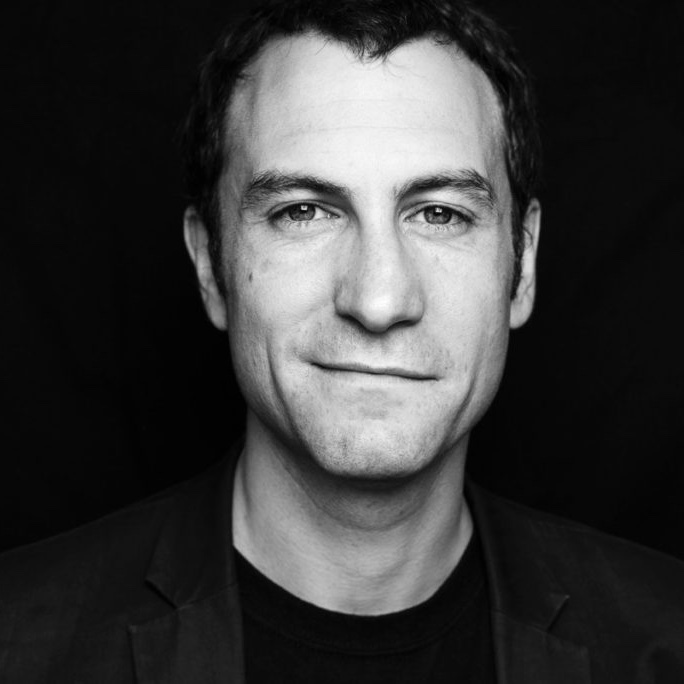
In this talk to Denizen, the community founded by Jenny Stefanotti to bring people together around systemic change, Rufus Pollock, co-founder of Life Itself and Seeds of Renaissance, starts with that feeling and asks the room to stay with it for a moment. The outrage is precious, he says. It tells us something is up, and it is what moves us to act. But outrage alone isn’t enough. It needs a framework, and the framework had better be right.
Outrage needs a diagnosis
Rufus goes back to Dickens’s London: children sent up chimneys, families packed dozens to a room, vast wealth next to squalor. People felt the injustice in their bones. Then came the stories that tried to explain it.
One story said the Jews were to blame, and millions believed it. The feeling was real. The diagnosis was catastrophically wrong.
A far more serious story was Marxism. Marx saw a great deal that was true: extraction, inequality, the dehumanizing of labor. But Rufus argues he got the root wrong. Marx treated economics as the foundation and culture as something built on top, when it may be closer to the other way around. The idea was that fixing who owns the means of production would fix everything else. It didn’t.
Rufus compares it to a visit to the doctor. You have a bad headache and are told it’s a migraine, so you take an aspirin. If it’s actually a tumor, that matters. Diagnosis shapes cure. So we need frameworks with real intellectual grounding, held lightly. That, he says, can be “the difference between outrage that transforms and outrage that destroys.”
Symptoms, diagnosis, prognosis, treatment
The framework he sets out follows the shape of any hospital drama:
- Symptoms. A growing set of linked crises: ecological, political, social and spiritual, some of them potentially catastrophic.
- Diagnosis. These crises share a common root in the worldview and values of modern civilization. That worldview includes the belief in endless growth, the idea that we are separate individuals, the faith that science and technology are the only way to solve our problems, and a world experienced as dead matter without meaning. Rufus calls this the metacrisis: a crisis in the culture that lies beneath all the others.
- Prognosis. It isn’t all bad news. Cultures have changed course before, even when their beliefs seemed permanent. The divine right of kings once looked eternal.
- Treatment. New ways of seeing start in small pockets of people who live differently. These grow into communities with shared practice and, alongside them, movements.
This, he suggests, is why so much climate work has stalled despite decades of clear science. We blame oil companies and greedy capitalists, and they do share the blame. But underneath is a deep cultural commitment to growth and to solving everything with technology. “System change, not climate change,” the placards say. Rufus would write: cultural change.
Rome was winning too
The most provocative turn in the talk comes here. Much hopeful thinking about new ways of organizing promises they’ll be more efficient, with self-organizing teams that outperform the old hierarchies. Rufus is skeptical. Capitalism, he says bluntly, is very good at production. Whatever comes next probably won’t win by beating it at its own game.
His comparison is early Christianity. The first Christians didn’t offer Rome a better way to run an empire. They offered purpose and meaning. He is clear that he isn’t calling for a return to Christianity. His point is that people will be drawn to what comes next less by material success and more by what our culture has lost.
We all have a religion, he adds, even the most secular of us: Mars as our destination, progress, discovery. The question is whether ours nourishes us.
Fish who can’t see water
The hardest things to see are the ones we swim in. Two hundred and fifty years ago, slavery was normal and profitable, and respectable people defended it. Today we ask how anyone could have missed it. Rufus points to the Quakers, a tiny sect with no one leading their meetings, as among the first to say it out loud and be laughed at for it.
Then he turns to his own childhood on a farm. His mother, still farming at 83, loves animals and could hardly bear to watch them loaded for the slaughterhouse. She has lived with that contradiction her whole life. Cultures live with theirs too, until suddenly they don’t. Change, he says, builds like snow before an avalanche: gradually, and then all at once.
Open knowledge, closed minds
Some of the honesty in this talk is personal. Rufus spent fifteen years working for open data and open information, and he wrote the first definition of open data. Part of him believed that better information would lead to better decisions. He came to see that open knowledge doesn’t make open minds. That realization led him to co-found Life Itself ten years ago, to ask what deep social change would really take.
He doesn’t claim to have the answer. How do people come to see the deeper crisis? Does it take a week together? Practice? Ideas? He calls this his central question. He also sketches where people might be ready to hear it:
- effective altruists who follow AI risk all the way to collective action, and from there to culture
- meditators who sit on the cushion without a larger frame
- activists tired of making everyone else wrong
The light in their eyes
Rufus closes with two thoughts. The first is sobering. He once asked a Zen master when people change. The answer: when they have to. Civilizations are the same, and our back isn’t yet against the wall.
The second is a story. Around 250 CE, a rich, bored young Roman goes to the circus the way we might put on Netflix. He watches Christians die in the arena and sees something in their eyes that no money could buy. They are at peace, and their eyes are alive.
The point isn’t martyrdom. What will move us, Rufus suggests, is not only necessity but longing: to heal the hole in our hearts and our rupture from the living world. That doesn’t mean going back. It means going forward into something that holds reason and mystery together.
About Denizen
Denizen is a community founded by Jenny Stefanotti that brings people from many fields together to work on systemic change. Through its podcast, salons and events, it explores possible regenerative futures across economics, politics, technology, culture, justice and consciousness.
Links
- Denizen
- Denizen podcast
- From Polycrisis to Metacrisis, the Seeds of Renaissance paper behind this talk